
Guides
Nicotine Pouch Strength Chart: 6 mg to 50 mg, Explained
Sep
Quick answer: nicotine pouch strength is measured in milligrams of nicotine per pouch. 6 mg is the sensible starting point, 9–11 mg is where most regular users live, 15–17 mg is genuinely strong, and anything 20 mg and up is for high-tolerance users only. When in doubt, buy the lower one — you can step up next tin, but you can’t un-buy a tin that’s too strong. The full nicotine pouch strength chart is below.

What the mg number actually means
The number on the tin is milligrams of nicotine per pouch — not per tin, and not a percentage. An 11 mg pouch carries 11 mg of nicotine, of which your body absorbs a fraction over the 20–60 minutes it’s in. Absorption varies with how long you keep it in, where it sits, and your own physiology, which is why the same pouch can feel different on different days.
One thing the number doesn’t tell you: delivery speed. A moister pouch (VELO’s format, for instance) releases faster than a drier one (White Fox) even at similar strengths — so a 10 mg VELO can feel punchier out of the gate than a 12 mg White Fox that builds slower and lasts longer.
The dot system, decoded
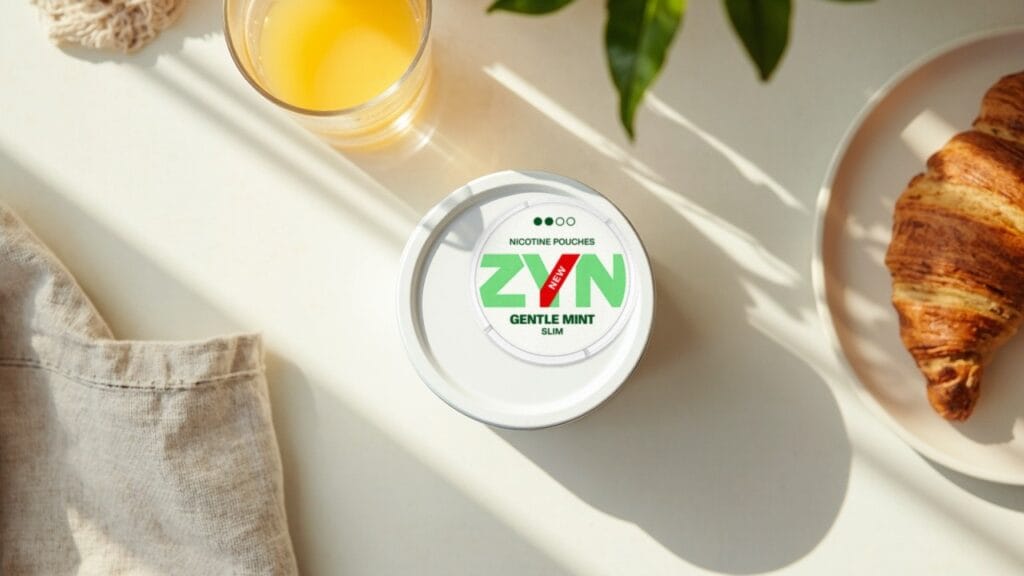
Most tins carry a row of dots on the lid — the brand’s own intensity scale. Filled dots out of the total tell you where that tin sits within that brand’s range. Two filled out of four on a ZYN tin means mid-range for ZYN; three out of six on a VELO means mid-range for VELO. The catch: dots don’t compare across brands. A three-dot Pablo and a three-dot ZYN are in different weight classes entirely. Compare the mg number, not the dots.
The nicotine pouch strength chart
| Strength | Feels like | Who it suits | From our shelf |
|---|---|---|---|
| 6 mg | Mild, easy-going. A gentle lift with little chance of overdoing it. | First-time users; light or occasional users | ZYN Gentle Mint, Lemon Spritz |
| 9–11 mg | Satisfying and steady. The category’s centre of gravity. | Regular users; most people who switched from smoking | ZYN Cool Mint 11, Spearmint 9, VELO Polar Mint 11 |
| 12–14 mg | Noticeably firm. The step people take when 11 stops registering. | Established users with steady tolerance | VELO Ruby Berry 14, White Fox Double Mint 12 |
| 15–17 mg | Genuinely strong. A clear hit with real staying power. | Heavier users; former pack-a-day smokers | White Fox Full Charge 16, VELO Max Freeze 17 |
| 20–24 mg | Intense. Sweating-forehead territory if your tolerance isn’t built for it. | High-tolerance users only | VELO X-Freeze 20, Black Edition 22, ZYN Frosted Mint 24 |
| 50 mg | The ceiling of the category. Not a bigger version of 24 — a different sport. | A small group of very experienced users. Nobody’s first, tenth, or fiftieth tin. | Pablo Exclusive series |
How does pouch strength compare to cigarettes?
Rough equivalence, with a big caveat: a cigarette delivers roughly 1–2 mg of absorbed nicotine, but it delivers it fast, through the lungs, which hits differently than the slow absorption from a pouch. As a working guide: someone who smoked a few cigarettes a day usually lands comfortably at 6–9 mg pouches; a half-pack-a-day smoker around 9–11 mg; a pack-a-day smoker often needs 11–15 mg to feel settled. These are starting points, not prescriptions — the right answer is the lowest strength that stops you thinking about cigarettes.
How does it compare to vaping?
Vape juice strength is a percentage or mg/mL, which measures the liquid, not what you absorb — so direct conversion is messy. In practice: people vaping 3–6 mg/mL freebase juice typically match well with 6–9 mg pouches, and people on 20 mg/mL (5%) salt-nic devices — the typical disposable — usually need 9–14 mg pouches to feel satisfied, since heavy salt-nic use builds more tolerance than most vapers realize. VELO’s faster-release format tends to suit ex-vapers best; our VELO guide covers why.
Choosing your strength: match, don’t chase
The principle that serves every user: match your current intake, or step slightly down — never up. Chasing strength builds tolerance, tolerance costs money, and a 24 mg habit isn’t more enjoyable than an 11 mg one; it’s just harder to walk back. If you’re new to pouches entirely, start at 6 mg regardless of what you think you can handle, run a full tin, and adjust from there. Our European-line stock gives you every rung of the ladder — from ZYN’s gentle end to White Fox and beyond — so there’s no need to jump tiers. Not sure which tier is yours? Our Strength Finder asks three questions and hands you specific tins.
For picks at each level, our Best Nicotine Pouches in Canada guide names names.
FAQ
Is 11 mg a strong nicotine pouch?
Moderately. It’s the most popular strength in the European range — satisfying for regular users, but a lot for a first-timer. If you’ve never used nicotine pouches, start at 6 mg instead.
What do the dots on the tin mean?
The brand’s own intensity scale — filled dots show where that product sits within that brand’s range. They don’t compare across brands; use the mg number for that.
What’s the strongest nicotine pouch?
In our range, Pablo’s 50 mg Exclusive series, followed by the 24 mg tier (Pablo and ZYN Frosted Mint). Strengths above 20 mg are strictly for experienced, high-tolerance users.
What strength should I start with if I smoke?
Light smoker: 6 mg. Half a pack a day: 9 mg. Pack a day: 11 mg, moving to 14–15 mg only if that genuinely doesn’t hold you. Start low — stepping up is easy.
Can I cut down by choosing weaker pouches?
Yes — stepping down through strengths (11 → 9 → 6 mg) is a common way users reduce their intake gradually. The wide strength ladder is one of the format’s genuine advantages.
More questions? Browse the rest of our nicotine pouch guides for flavour rankings, brand comparisons and how-tos.
Nicotine is addictive. Our products are for adult nicotine consumers of legal age (19+ in most provinces). If you don’t currently use nicotine, don’t start.
